

The Dream
Trading gets sold as the dream job. Total freedom, fast money, work from anywhere. In the last few years that story has been amplified by cheap brokers, online prop firms everywhere, and endless “day in the life” clips designed to make trading look like a shortcut to the good life. Sports cars, vacation footage, P&L screenshots. It is always the same bait, just repackaged for whatever platform you are scrolling.

The crazy part is that trading really is unusually accessible. There aren’t many “professions” where someone with zero real experience can open an account, hit a few buttons, and actually make money on day one. That early luck is exactly what hooks people. It creates the illusion that the skill gap isn’t that big, that you are one strategy away from consistency or one indicator away from cracking the code. That illusion is how people end up taking trading seriously for all the wrong reasons.
And to be fair, the freedom part can be real. No boss. No customers. No meetings. No pretending to care about corporate politics. You can work alone, control your schedule, travel more, and build your day around your life instead of the other way around. But that freedom does not come from watching a TikTok kid rent a Lambo for content. It does not come from a few YouTube videos, a flashy course, or some “proprietary system” with a clever name. That freedom comes from years of doing the unsexy work. Building an edge, tightening execution, and developing an inner game that does not fall apart the moment you hit a drawdown.
Anyone can draw trendlines and slap indicators on a chart. Technical analysis is not complicated. Fundamentals are not either. Those things matter, but they are not the separating factor. New traders love to believe there is a hidden indicator or a holy grail pattern that will act as their own personal ATM. It does not exist. Trading as an actual business is a game of managing risk, uncertainty, and probabilities, and it took me a long time (and plenty of tuition paid to the market) to truly internalize that.
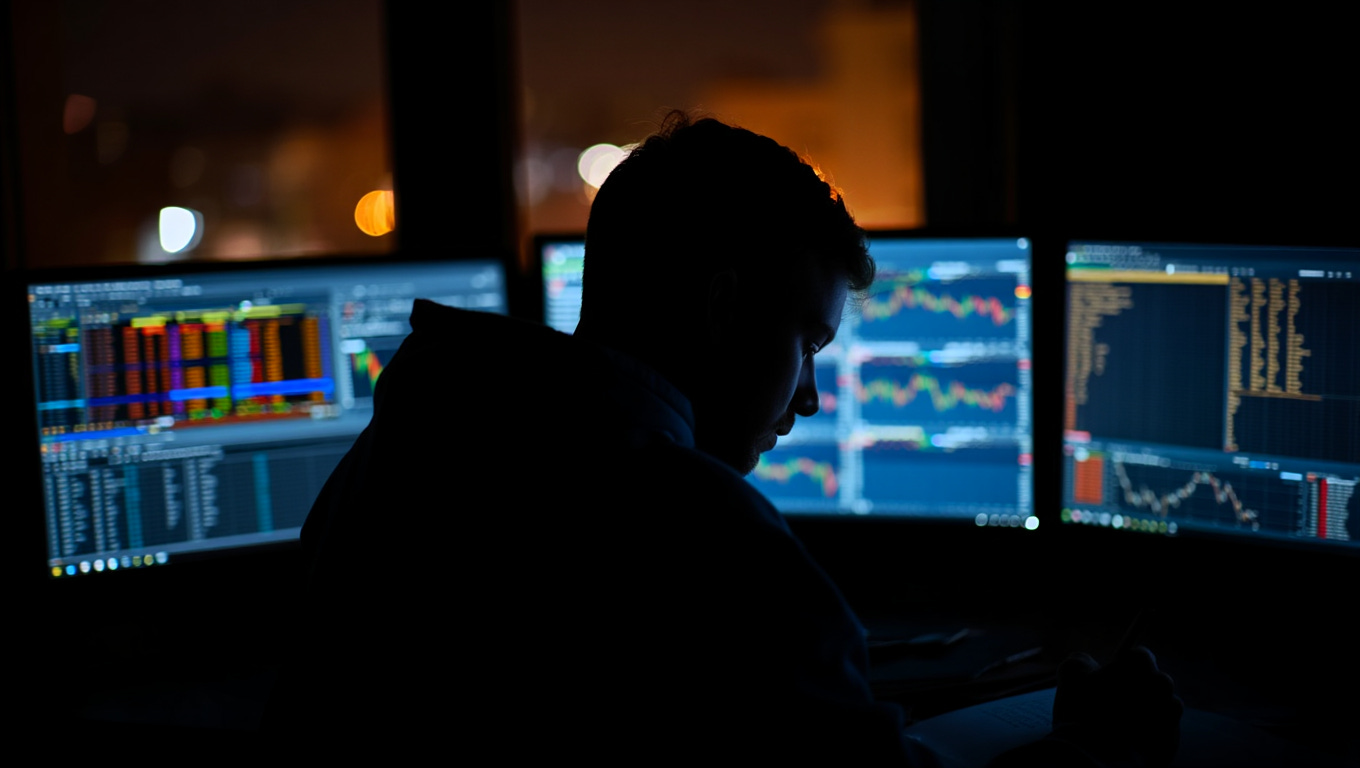
To be clear, when I say professional trading or trading as a business, I am not talking about hedge fund traders managing other people’s money with a salary, a team, and a risk manager watching their size. I am talking about the retail trader at home risking their own capital, with no safety net when they mess up. That reality looks nothing like the online highlight reel.
Why Most People Get Wiped Out
Most new traders lose not because the market is unfair or rigged, but because they bring beliefs into trading that sound reasonable, feel motivating, and are constantly reinforced online. In practice, those beliefs quietly destroy accounts.
Get Rich Quick Mentality
If you are getting into trading to get rich quick, do yourself a favor and don’t start. The fantasy is always the same: “I’ll learn this in a few months, quit my job, and pull six figures from my laptop on a beach.” That is not a plan. It is a dopamine story. Strategies that actually work, mental and technical, take years to develop. They demand patience, humility, discipline, and the ability to keep showing when you’re not getting rewarded. Most people are not lacking intelligence. They are lacking staying power. They underestimate how long it takes to go from “I had a good week” to “I have a repeatable process that can survive different market regimes.”
Predicting The Market
Many people confuse trading with investing, and it shows in how they think. Beginners believe success comes from prediction. Research enough, outsmart everyone else, and you win. That mindset is an ego trap. Real traders are not paid for being right. They are paid for managing risk while participating in favorable odds. They know exactly where they are wrong before entering a trade, and they size their positions so being wrong does not take them out of the game. Markets are unpredictable by nature and will humble anyone who thinks certainty is the edge. Risk management is what keeps you alive.
Profit Driven vs. Process Driven
Amateurs only think in terms of profits. For example, they will brag about making $1,000 on a trade without acknowledging that at one point they were sitting on a -$10,000 unrealized loss that was never part of the plan. That is not skill. That is luck. The same mistake shows up in position sizing. Beginners size trades based on how much they want to make instead of how much they are willing to lose. Confidence becomes size. Size becomes attachment. Attachment becomes bad decisions.
They also believe they need a large account to make trading worthwhile. In reality, what you need is a consistent way to define risk, a stop that actually means something, and the discipline to execute the same way every time. If you do not know what you are risking the moment you click the button, you are always one trade away from serious damage.
High Win Rate = Success
This one really trips people up. Winning most of your trades does not make you a good trader. You can win 90% of the time and still lose money if your losses are larger than your winners. One oversized loss can erase weeks or months of progress. It’s called boom-and-bust trading. This is where ego drains accounts quietly, because traders start optimizing for “being right” instead of optimizing for expectancy and capital preservation.
Herd Mentality
If you think watching financial news all day will make you a better trader, you are already behind. Most talking heads are not paid to be right. They are paid to talk. They react to price, they feed the herd, and the herd loses. Even when the information is accurate, it is rarely actionable in the way people think. By the time something is obvious and mainstream, it is usually already priced in, front-run, or positioned against.
If you want to last, you have to learn to trust your own plan and block out noise. That is far harder than it sounds when everyone around you is yelling that you are wrong. The crowd will always give you reasons to hesitate, chase, panic, or abandon your rules. If you cannot operate independently, this game will turn you into an emotional pinball.
What It Actually Takes
If you want to trade for real, not just participate, you have to rewire how you think and how you act. There are no shortcuts.
Relentless Discipline
If there is a closest thing to a holy grail in trading, it is discipline. This is what keeps you alive long enough for your edge to play out. Anyone can develop a system or write out a plan. Very few people can stick to it when real money is on the line and emotions are firing. There is no boss, no structure, and no one stopping you from breaking your own rules. The market does not care why you broke them.
Going Against Your Instincts
You have to do what feels unnatural. Most people hold losers too long and cut winners too soon. They want to be right more than they want to make money. Good traders do the opposite. They cut losses without negotiation, let winners work, and trust a process they have tested even when it feels uncomfortable. Your instincts are built for survival, not for trading. If you do not learn to override them, they will sabotage you.
Independent Thinking
You must think for yourself. Human nature pushes us toward the herd because it feels safer to be wrong together than wrong alone. In trading, the herd is usually broke. You cannot copy other people forever. At some point you have to build your own playbook, test it, refine it, and own both your wins and your losses. If you want certainty or validation, this game will expose you.
Position Sizing
Position sizing is not about confidence or how good a setup looks. It is about defining risk in advance so no single trade or streak can take you out. One of the most useful frameworks for this is thinking in terms of R, where one R represents a fixed unit of risk on a trade. When risk is expressed this way, results become measurable, repeatable, and emotional decision-making fades. You stop thinking in dollars and start thinking in probabilities and expectancy. When position sizing is done correctly and paired with a real edge, it becomes mathematically impossible to lose over a large enough sample. I will break this down in my next post and show exactly how R-based risk management changes everything once you understand it and apply it consistently.
If you are still reading and still serious, understand this. The freedom in trading is real, but it is earned the hard way. You pay with time, mistakes, humility, and discipline. You pay by showing up at your screen when no one is watching, when nobody cares, and when results don’t match your effort yet. The upside is that once you build something real, no one can take it from you.